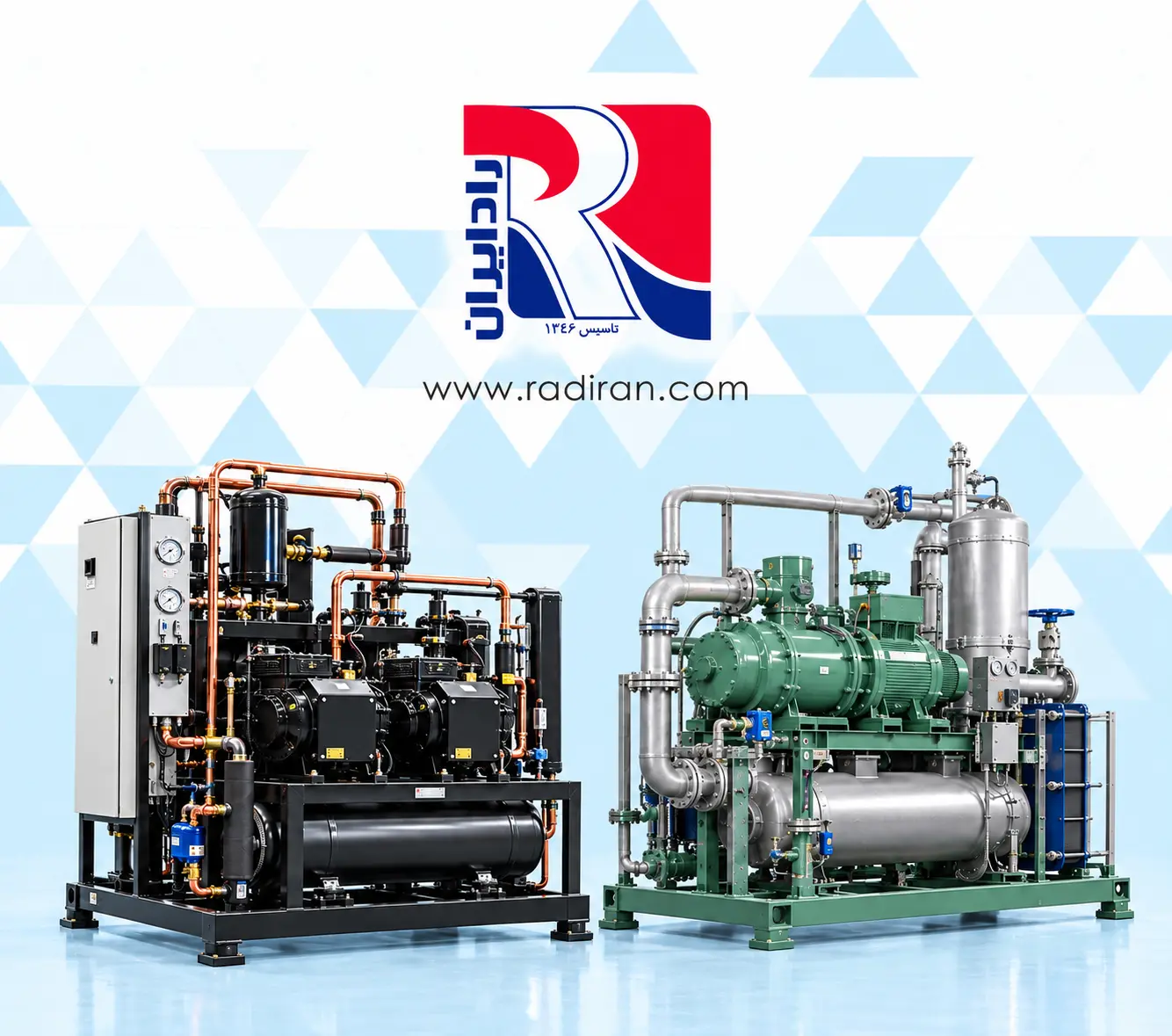
Halocarbon or Ammonia Refrigeration: Which Is Better for Cold Storage?
Choosing between a halocarbon refrigeration system and an ammonia system is an important decision when designing a cold storage facility. Both can provide reliable cooling and freezing, but the right choice depends on the required capacity, operating temperatures, energy consumption, safety requirements, and long-term costs.
There is no universal capacity threshold that makes one refrigerant the best option for every project. The refrigerant and system design should be evaluated together, based on the facility’s actual operating conditions.
What Is the Difference Between Halocarbon and Ammonia Refrigeration?
The term “Freon” is commonly used to describe several halocarbon refrigerants. However, these refrigerants do not all have the same properties. Their efficiency, operating pressures, environmental impact, and safety classifications vary.
A meaningful comparison therefore requires identifying the specific halocarbon refrigerant being considered.
Ammonia, designated R717, is a natural refrigerant widely used in industrial refrigeration. It has favorable heat-transfer properties and can deliver high efficiency in a properly designed system. However, its toxicity and limited flammability require careful engineering and appropriate safety measures.
Initial Investment and Lifecycle Costs
Halocarbon systems can offer practical advantages for smaller facilities, particularly where packaged equipment, straightforward installation, and readily available service support are priorities.
Ammonia systems are often attractive for industrial facilities with substantial refrigeration loads and long operating hours. Their potential energy savings may offset a higher initial investment.
However, rules such as “use halocarbon below 100 refrigeration tons and ammonia above 200 refrigeration tons” are too simplistic. Modern low-charge ammonia systems can also be suitable for smaller applications.
The economic assessment should consider:
- Equipment and installation costs.
- Annual energy consumption.
- Maintenance and service requirements.
- Safety equipment and operator training.
- Refrigerant availability and replacement costs.
- Future expansion and eventual equipment replacement.
The system with the lowest purchase price does not necessarily have the lowest total cost of ownership.
Product Type, Refrigeration Load, and Operating Temperature
The selection process starts with understanding the products, storage conditions, and cooling process.
A facility storing chilled dairy products has different requirements from a meat-processing plant, a frozen-food warehouse, or a blast-freezing operation.
Ammonia is widely used in food processing, meat production, dairy facilities, and industrial freezing. Halocarbon systems are also used across many cold storage and processing applications.
Low operating temperatures can make efficient system design especially important. However, a temperature such as −30°C does not automatically make ammonia the better choice.
The assessment should include the required product temperature, freezing time, peak refrigeration load, annual operating hours, and whether a single-stage, two-stage, or cascade system is appropriate.
Energy Efficiency
Ammonia has a high latent heat of vaporization and favorable heat-transfer characteristics. These properties can support efficient refrigeration, particularly in industrial applications.
However, a lower refrigerant mass flow rate does not automatically mean lower electrical consumption.
Actual system efficiency also depends on:
- Compressor selection and performance.
- Evaporating and condensing temperatures.
- Heat-exchanger design.
- Pressure losses.
- Part-load operation.
- Control strategies.
- Defrost methods and auxiliary equipment.
The most useful comparison is the estimated annual energy consumption of complete systems operating under the same conditions, rather than a comparison of refrigerant properties alone.
Safety and Regulatory Requirements
Ammonia is toxic, and a release can create a serious hazard. Its strong odor may provide an early indication of a leak, but smell must never replace engineered detection and protection.
Depending on the installation and applicable local requirements, safety provisions may include gas detection, ventilation, pressure-relief arrangements, emergency procedures, and trained personnel.
Halocarbon refrigerants also require appropriate precautions. Depending on the refrigerant, potential hazards include oxygen displacement, high pressure, flammability, and hazardous decomposition products when exposed to heat.
Safety requirements must be determined for the selected refrigerant, system design, refrigerant charge, and installation location.
Materials and System Compatibility
Material compatibility is a critical consideration in ammonia refrigeration.
Copper and many copper alloys, including brass, are generally unsuitable for ammonia systems. Piping, valves, seals, and other components must be selected specifically for ammonia service.
Halocarbon systems have their own compatibility requirements involving lubricants, seals, piping, and compressor components. Substituting a refrigerant without checking these requirements can compromise performance and reliability.
Maintenance and Technical Expertise
Ammonia installations require personnel with appropriate training in industrial refrigeration and ammonia safety. Access to qualified technicians should be considered before choosing the system.
Halocarbon systems may benefit from a broader local service network, particularly for packaged commercial equipment. However, complex halocarbon installations also require specialized expertise.
Maintenance planning should address inspection, leak detection, oil management, equipment condition, and the availability of spare parts.
Any refrigerant release should be managed according to the facility’s emergency procedures and applicable reporting requirements.
Flexibility and Future Expansion
Ammonia systems can be designed to support future expansion, but flexibility is not an inherent advantage of ammonia alone.
Both ammonia and halocarbon installations can be modular or expandable. Their flexibility depends on the original design, available equipment capacity, piping arrangements, controls, and space.
If expansion is expected, it should be included in the initial engineering assessment.
Environmental Considerations
Ammonia has zero ozone-depletion potential and a negligible direct contribution to global warming.
The environmental impact of halocarbon refrigerants varies considerably. The selected refrigerant’s global-warming potential, applicable restrictions, and long-term availability should be reviewed.
Environmental assessment should also account for electricity consumption and refrigerant leakage over the system’s operating life.
Other configurations, including low-charge ammonia systems and ammonia–carbon dioxide cascade systems, may also deserve consideration.
Making the Right Choice
The best refrigeration system is the one that meets the facility’s cooling requirements while delivering acceptable lifecycle costs, manageable safety requirements, and reliable operation.
At Radiran, we recognize that refrigerant selection should be based on the project’s actual needs. Capacity alone is not enough: operating temperatures, energy use, technical support, environmental considerations, and future expansion all influence the decision.
In Radiran, we know a sound comparison evaluates complete system designs—not just the names of the refrigerants.