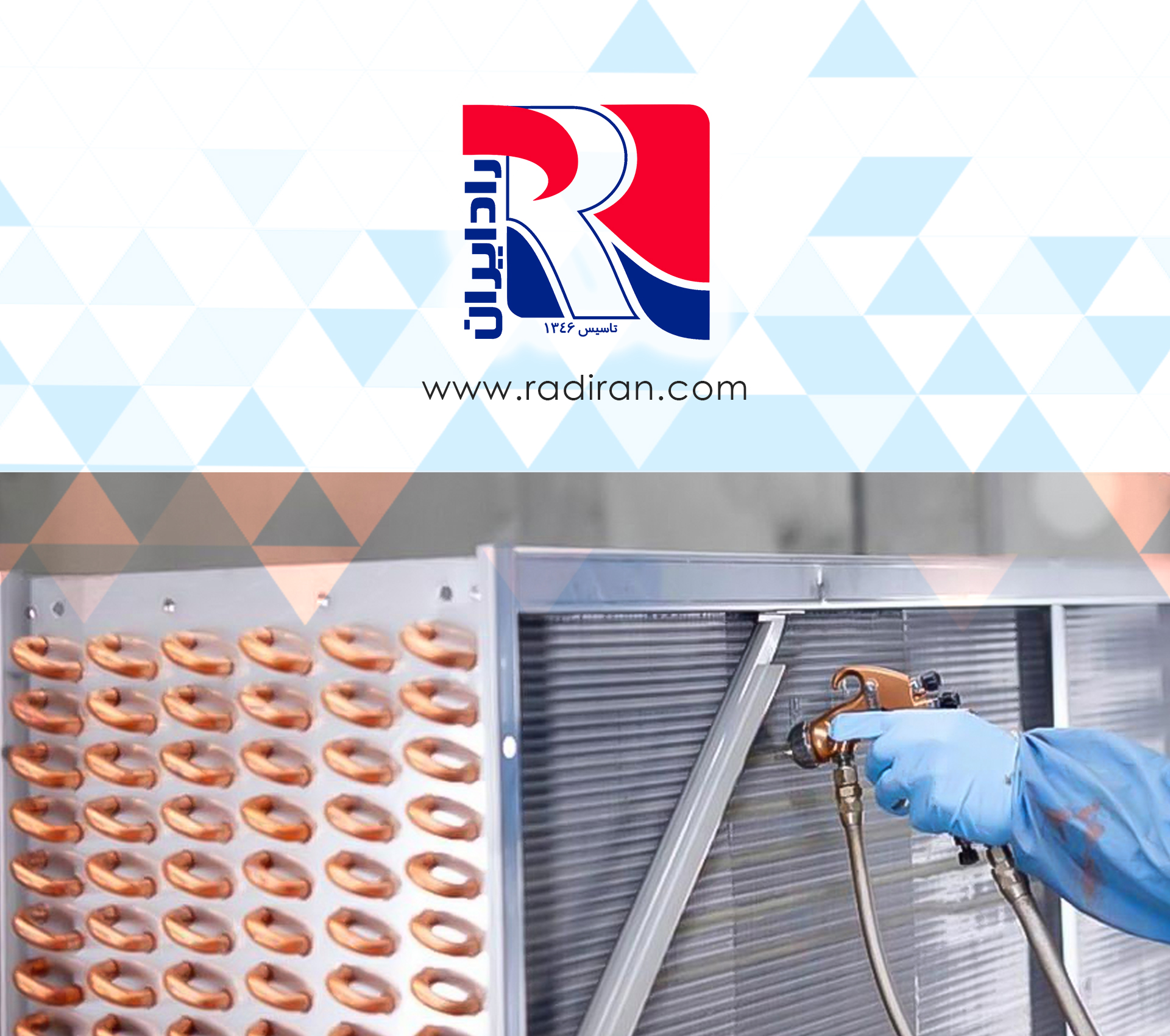
Fin Tube

چه زمانی تعویض مبدل حرارتی (کویل فین-تیوب) به‌صرفه‌تر از تعمیر آن است؟

When Is Replacing a Heat Exchanger (Fin Tube Coil) More Cost Effective than Repairing It

Fin tube heat exchangers play a key role in HVAC, heating systems, and industrial processes. Choosing between repair and replacement should be based on technical, economic, and operational analysis. The main criteria are outlined below. 1. Extent and type of failure • Superficial faults (worn fins, removable fouling, minor joint leaks) can usually be fixed by cleaning, repair, or replacing ancillary parts. • Widespread damage—such as multiple tube perforations, deep internal corrosion, structural frame failure, or severe fin deformation—indicates irreversible damage and often...

Read more...
انتخاب فاصله پره (Fin Pitch) در شرایط گردوغبار و آلودگی هوا در کویل های فین تیوب

Fin Pitch Selection for Dusty and Polluted Air Conditions in Fin Tube Coils

Introduction In fin-tube coils used for heat exchange, selecting the fin pitch (spacing between fins) is critical for thermal performance and long-term reliability, especially in dusty or polluted atmospheres. An improper fin pitch can cause degraded heat transfer, excessive pressure drop, and more frequent maintenance. Factors affecting fin pitch selection • Type and concentration of contaminants: Environments with coarse particulate matter (industrial dust, sand) promote rapid accumulation on fins; therefore, wider fin spacing is recommended to reduce blockage. Environments with fine or sticky...

Read more...
تأثیر فاصله فین (FPI) در کویل فین-تیوب بر راندمان حرارتی و افت فشار

Effect of Fins Per Inch (FPI) in Fin-Tube Coils on Thermal Efficiency and Pressure Drop

Fins per inch (FPI) is a key design parameter in fin tube coils that directly affects heat transfer performance and airside pressure drop. Increasing FPI means more fins per unit length; this change brings both benefits and trade offs. Effect on Thermal Efficiency • Increased heat transfer area: Higher FPI increases the total fin surface area in contact with air, typically raising the overall heat transfer capacity of the coil. • Improved boundary layer disruption: More fins create more frequent air–metal interfaces, which...

Read more...
تأثیر عیوب خم 180 درجه (استاندارد، چین‌خوردگی و دوپهــــن‌شدگی) در ناحیه یو بر عملکرد کویل فین-تیوب

Impact of 180° U-Bend Defects on the Performance of Fin-Tube Coils

<p>

Overview

In fin-tube heat exchangers, the 180° U-bend region plays a critical role in fluid distribution, heat transfer, and pressure drop. When the bend is manufactured correctly—with proper curvature, constant internal diameter, and smooth internal surface—the flow field and thermal performance remain close to design values. However, two common manufacturing defects in the U-bend can severely degrade performance: local corrugation and local flattening. This document provides a technical assessment of all three conditions.

1....

Read more...
روش‌های جلوگیری از خوردگی در کویل‌های فین-تیوب

Corrosion in Fin–Tube Coils and Methods for Preventing It

Fin–tube coils, which typically combine aluminum fins with copper tubes, are widely used in air-conditioning and HVAC systems. Corrosion in these components leads to reduced heat-transfer performance, efficiency loss, leakage, and shortened service life. The following sections present practical, preventive engineering methods for protecting these coils.

Material Selection and Proper Design

Corrosion-Resistant Alloys

Selecting aluminum and copper alloys with inherently high corrosion resistance—such as surface-treated aluminum alloys or copper alloys with controlled alloying elements—forms the foundational approach to durability...

Read more...
سایزینگ کلکتور ورودی و خروجی کویل فین-تیوب آبی — راهنمای فنی و دقیق

Technical Guide for Sizing Inlet and Outlet Manifolds of Water-Fin–Tube Coils

General Principles

Primary Objective:To ensure uniform water distribution across all tube circuits, minimize pressure drop, and prevent cavitation and noise. Key Parameters:Total system mass flow rate m˙\dot{m}m˙, number of tube rows NtN_tNt​, internal tube diameter dtd_tdt​, effective coil length LLL, desired velocity in each tube, and allowable total pressure drop in the manifolds.

Fundamental Calculations

1. Determining Total Flow Rate

Use the coil heat load QQQ and water temperature difference ΔT\Delta TΔT: m˙=QcpΔT\dot{m} = \frac{Q}{c_p \Delta T}m˙=cp​ΔTQ​ where cpc_pcp​, the specific...

Read more...
Different Types of Fin Tubes

Different Types of Fin Tubes Based on Design

There are various types of fin tubes available for heat transfer applications, each uniquely designed with specific dependencies. Each type of fin tube has its advantages and disadvantages in specific applications to be used in the most suitable conditions. Different Types of Fin Tubes Based on Type of Fin Fin Plate Wrap-on Fin Extruded Fin Fin Plates The plate heat exchanger is a type of heat exchanger that uses plates to transfer heat between fluids. In most cases, the plate fin is categorized as a compact...

Read more...
Heat transfer in fin tube coils

Heat transfer in fin tube coils

Heat transfer in fin tube coils is an important aspect of many thermal systems, including air conditioning, refrigeration, and heat exchangers. Understanding the key factors influencing heat transfer in fin tube coils is essential for optimizing their performance. Radiran in this essay will explore these important factors. Firstly, the geometry of the fin tube coil significantly impacts heat transfer. The surface area of the fins plays a critical role in enhancing heat transfer rates by increasing the...

Read more...
D:\ \New folder\1402\Radiran\articles\40 - Different types of fin tube Condensers

Different types of fin tube Condensers

Condensers can be classified based on their configurations and designs. Some common types include: 1. Shell and Tube Condenser: Consists of tubes inside a shell through which the refrigerant flows, exchanging heat with water or air surrounding the tubes. 2. Air-Cooled Condenser: Uses ambient air to cool and condense the refrigerant. Can be further categorized into different configurations like: - Flat Plate Condenser: Horizontal flat plates for heat exchange. - V-Type Condenser: V-shaped configuration for improved airflow. - W-Type Condenser: Multiple V-shapes for enhanced heat...

Read more...
Fin Tube Coils Manufacturing Process

Fin Tube Coils Manufacturing Process

1. Material Selection: - Choose the base material for tubes and fins based on factors such as thermal conductivity, corrosion resistance, and compatibility with the working fluid and environmental conditions. There are distinct choices for each part such as Copper or Stainless Steel for tubes, and for fins we can choose between Copper and Aluminum. 2. Tube and Fin Design: - Optimize the design of tubes and fins to meet the specific heat transfer requirements of the application. Consider parameters like tube diameter,...

Read more...