Gold Fin and Blue Fin Heat Exchangers: Differences and Applications
<p>
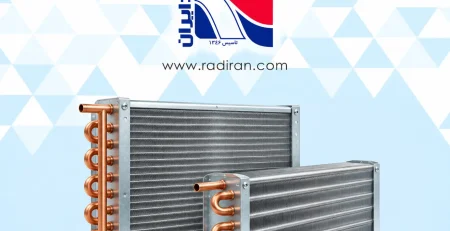
Fin-and-tube coils are widely used in air conditioning, cooling, and heating systems. Their fins increase the surface area in contact with air, helping transfer heat. However, exposure to moisture, pollutants, and salt can cause corrosion and reduce coil performance.
One way to limit this damage is to use fins with protective coatings. Blue fin and gold fin are common commercial terms for these products in the HVAC industry. Selecting the right option requires reviewing the coating’s technical specifications: colour alone does not indicate its chemical composition, quality, or corrosion resistance.
What Is Gold Fin?
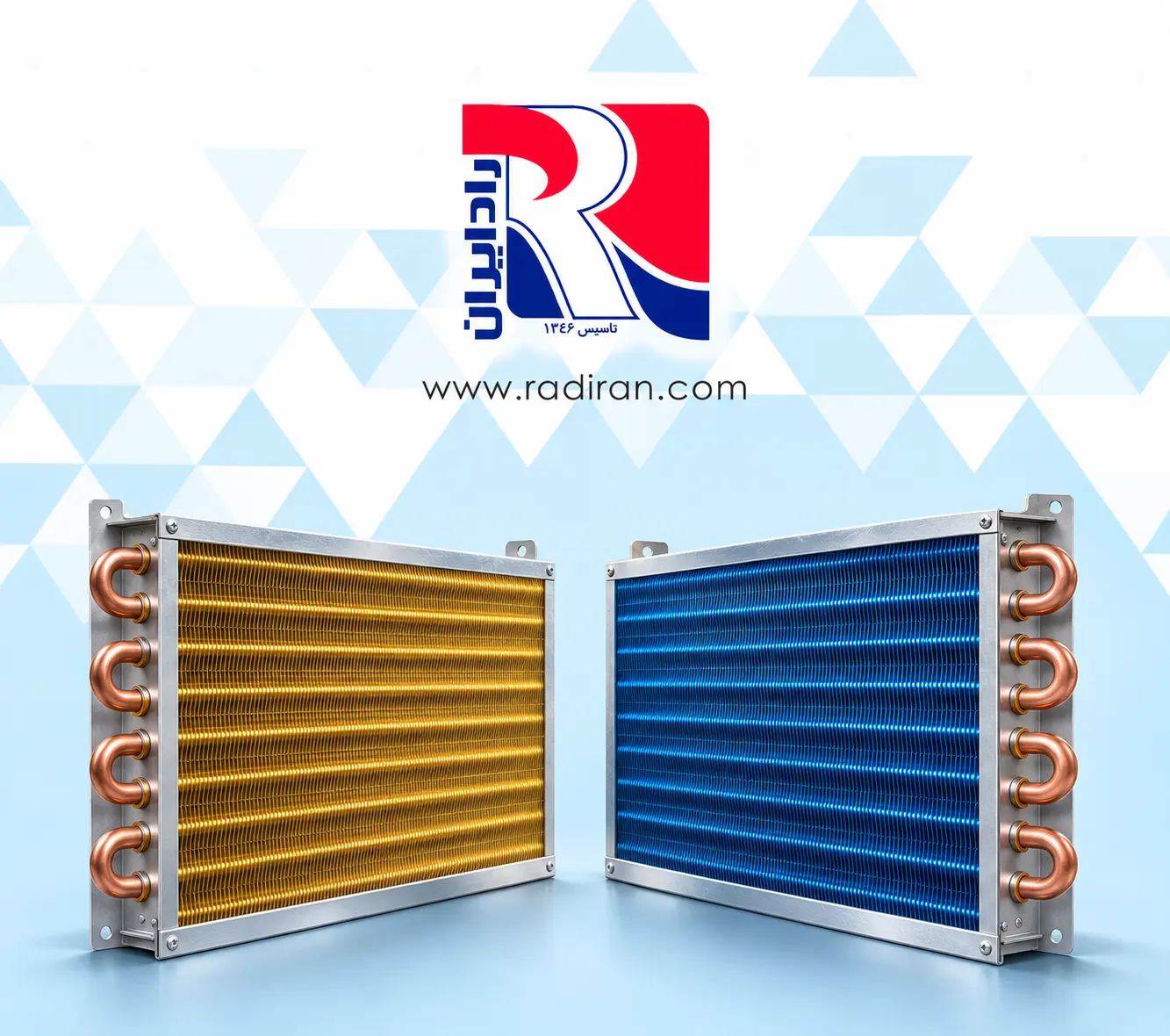
Gold fin refers to fins with a gold-coloured coating. Depending on the product specifications, this coating may be designed to improve corrosion resistance, provide hydrophilic properties, or combine both functions.
With hydrophilic coatings, water tends to spread across the surface as a thin film rather than form separate droplets. In coils where condensation occurs, this property can help condensate drain more effectively and reduce droplet accumulation between the fins.
Depending on the coating type and quality, potential benefits include:
- Reduced damage caused by moisture and corrosive agents
- Improved condensate drainage in hydrophilic versions
- Better preservation of coil performance over time
- Greater fin durability under conditions suited to the coating’s specifications
A gold finish does not mean the coating contains gold, nor does it establish that the product is superior to blue fin.
What Is Blue Fin?
Blue fin refers to fins with a blue-coloured coating, commonly used in air conditioning coils. Depending on the manufacturer’s formulation, these coatings may provide hydrophilic properties and corrosion resistance.
In hydrophilic versions, water spreading across the fin surface can help reduce water bridging between adjacent fins and support condensate drainage. Corrosion resistance must also be assessed using the product’s technical documentation and test results.
A blue colour alone does not establish that the coating is epoxy-based or suitable for coastal environments. Such applications require verified resistance to salt and other corrosive agents.
What Is the Difference Between Gold Fin and Blue Fin?
The main differences lie in the coating’s composition and documented performance.
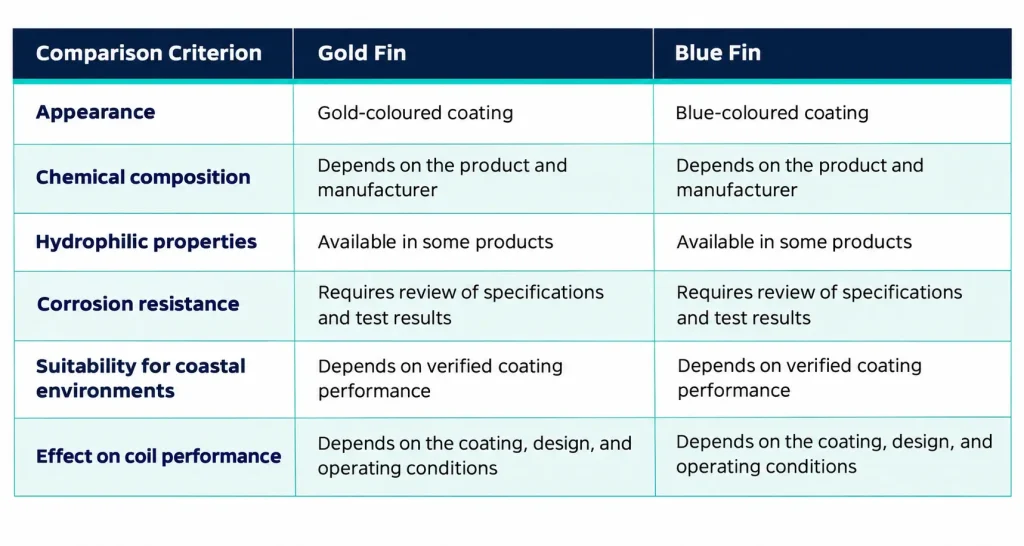
Consequently, assumptions such as “gold fin is always better” or “blue fin is always more suitable for coastal areas” are insufficient grounds for technical selection.
Do Fin Coatings Improve Heat Transfer?
The purpose of a protective coating is to reduce surface deterioration and help maintain coil performance throughout its service life. A hydrophilic coating can also improve how water behaves on the fin surface when condensation occurs.
However, an improvement in heat transfer efficiency cannot be assumed for every coating. Coating thickness and material, fin spacing, air velocity, moisture conditions, and coil design all influence the outcome. A reliable assessment requires product-specific performance data.
What Should You Consider When Selecting a Coating?
Before choosing blue fin or gold fin, consider the following factors:
- Installation environment: Humidity, proximity to the sea, and exposure to industrial pollutants
- Coil application: Evaporator, condenser, or heating and cooling coil
- Coating specifications: Composition, thickness, adhesion, and hydrophilic properties
- Test results: Corrosion test method, duration, and acceptance criteria
- Extent of protection: Fin coverage and the protection provided to tubes, connections, and other coil components
- Maintenance requirements: Approved cleaning methods and cleaning agents
In corrosive environments, fin protection is only part of the solution. The durability of the complete coil also depends on the materials and protection of its other components.
Maintaining Coils with Protective Coatings
A protective coating does not eliminate the need for routine servicing and cleaning. Dust, salt, and other contaminants can still accumulate and affect airflow and coil performance.
To preserve the coating, cleaning should follow the manufacturer’s instructions. Unsuitable cleaning agents, stiff brushes, or excessive water pressure may damage both the coating and the fins.
Selecting the Right Coil for Your Project with Radiran
The choice between blue fin and gold fin should be based on actual project conditions and the product’s technical specifications. The right coating is one that matches the installation environment, application, and maintenance programme.
To explore the available options and select a fin-and-tube heat exchanger suited to your project, discuss your operating conditions and technical requirements with the team at Radiran.
<p/>