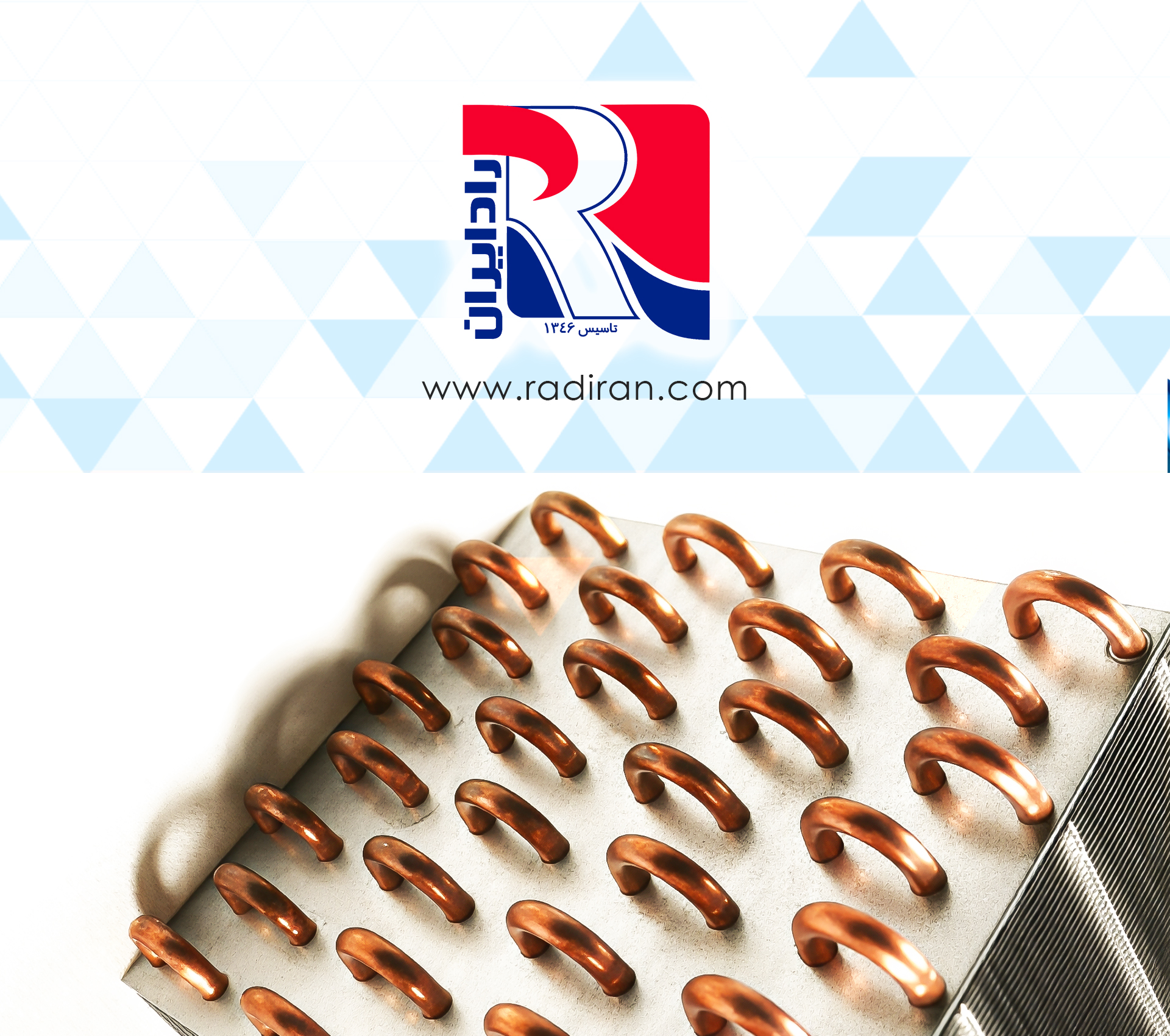
Comparison of Inline and Staggered Arrangements in Fin & Tube Coils
Fin and tube coils (aluminum fins with copper tubes) are typically manufactured in two tube layout configurations: inline (straight columnar rows) and staggered (triangular/dense pattern). Each arrangement affects airflow behavior, heat transfer coefficient, pressure drop, and manufacturing costs differently.
Inline Arrangement
Tubes are placed in uniform rows and columns, forming a rectangular grid rather than a hexagonal pattern. Airflow is more orderly and less turbulent, resulting in uniform velocity distribution and easier convection modeling. The laminar boundary layer at the microscale can be beneficial for predictable heat transfer in certain conditions.
However, lower turbulence leads to a reduced convection coefficient and lower surface heat transfer rates (lower h). Dead zones and separated flows behind the fins may become larger, reducing heat exchange uniformity. Pressure drop is generally lower, enabling fan operation with reduced energy consumption. At high velocities, insufficient mixing may compromise effective heat exchange efficiency.
Manufacturing and assembly costs are typically lower due to the simpler layout and more precise production processes. Operational costs are reduced through lower fan power consumption, and maintenance is easier. The downside is that achieving the same thermal capacity as a staggered arrangement may require more fin surface area or additional tube rows, potentially increasing material costs and overall volume.
Staggered (Triangular) Arrangement
Tubes are arranged in a triangular pattern with shorter flow-path distances and higher tube density. Turbulence between tubes increases significantly, raising the convection coefficient and improving surface heat transfer (higher h). Flow distribution is better and fin surface utilization is more effective, resulting in higher thermal capacity per unit volume.
Complex flow patterns and local temperature differences become more likely, complicating analysis and design. Air pressure drop and flow resistance are considerably higher, requiring stronger fans and increased energy consumption. Dust accumulation and fouling between tubes are more probable, degrading long-term performance.
For the same volume, greater thermal capacity is achieved, potentially saving space and reducing equipment footprint. However, higher manufacturing precision is needed, increasing assembly costs and the number of connections; fin and tube material usage may also rise. Operational costs are higher due to more powerful fan requirements and more complex cleaning procedures.
Summary
If the priorities are low pressure drop, lower manufacturing cost, and ease of maintenance—and space is not a constraint—the inline arrangement is typically preferable. If maximizing heat transfer per unit volume and saving installation space are primary goals, and fan energy consumption and fabrication costs are acceptable, the staggered (triangular) arrangement is the superior choice. In practice, the final selection depends on design parameters such as air velocity, allowable pressure drop, space limitations, and both operational and capital costs. Optimization usually involves a combination of fin geometry, tube spacing, and layout configuration.