Boiling of Refrigerant in the Evaporator – Fin-and-Tube Coil
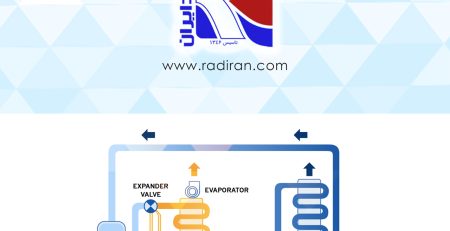
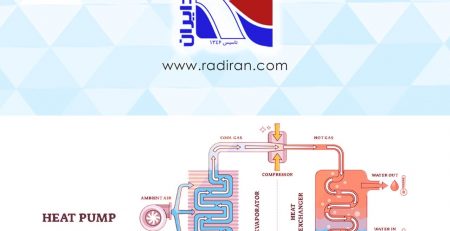
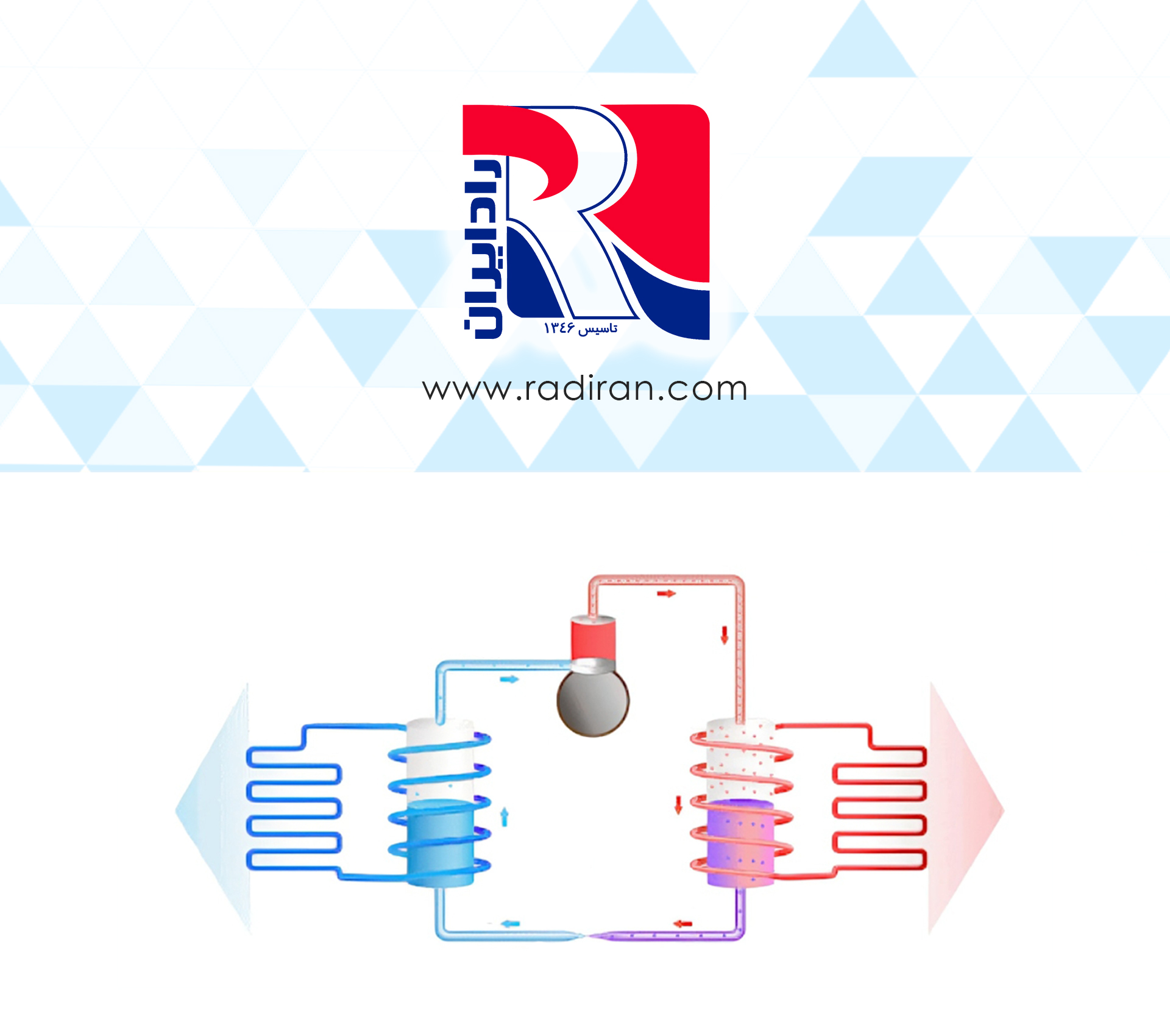
The evaporator is one of the most important components of the refrigeration cycle, and its main job is to absorb heat from the surrounding environment and convert the refrigerant from liquid to vapor. In a fin-and-tube coil, the refrigerant flows inside the tubes while air passes over the fins. The fins increase the heat-transfer surface area, allowing heat to move from the air to the refrigerant more efficiently. As a result, the temperature of the surrounding environment drops.
Boiling begins when the low-pressure, low-temperature liquid refrigerant enters the evaporator. At this stage, the refrigerant temperature is still below, or very close to, its saturation temperature at that pressure. As it absorbs heat from the passing air, its temperature rises until it reaches the saturation point. From that moment, instead of a noticeable temperature increase, the added energy is used for a phase change, and the refrigerant starts to evaporate.
The boiling process in the evaporator usually begins at the inner surface of the tubes, where there is a temperature difference between the tube wall and the liquid refrigerant. Vapor bubbles form at tiny surface irregularities or nucleation sites. This is called nucleate boiling. The bubbles grow, detach from the surface, and move along with the refrigerant flow and the turbulence created inside the tubes. At the same time, fresh liquid takes the place of the released bubbles, and the cycle continues.
Along the evaporator path, there is a mixture of liquid and vapor refrigerant. As more heat is absorbed, the vapor fraction increases until, at the end of the evaporator, nearly all of the refrigerant has turned into vapor. For better performance, a small amount of superheat is usually maintained at the outlet to prevent liquid refrigerant from entering the compressor. If the superheat is too high, part of the evaporator surface is used to warm the vapor, which reduces cooling capacity.
Therefore, refrigerant boiling in the evaporator is a highly effective heat-transfer and phase-change process that creates cooling by absorbing energy from the environment. Proper coil design process in the Radiran, airflow, refrigerant charge, and pressure control all play important roles in the efficiency of this process.